
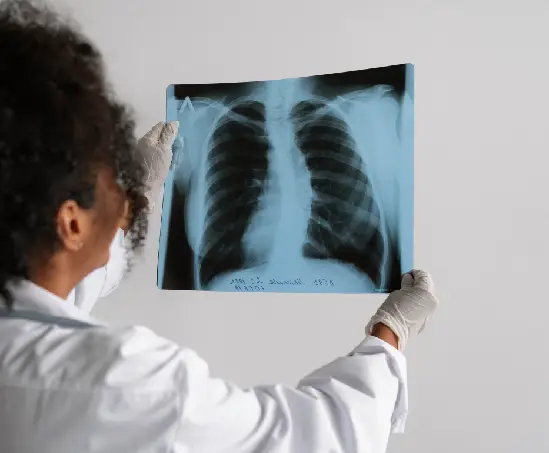
What is Pulmonology Treatment?
Pulmonology is the medical speciality focused on diagnosing and treating lung and respiratory conditions. From asthma, COPD, allergies, and chronic cough to breathing difficulties and sleep-related issues, pulmonology care helps patients breathe easier and live better.
For persistent cough, breathing discomfort, wheezing, or chest congestion, Phoenix Medical Center offers trusted pulmonology care with expert consultation and patient-focused support. Schedule an appointment today.
Meet Your Lung Specialists
From nagging cough to breathlessness, our specialists help your lungs get the attention they deserve.

Dr. Kumar Shankar Podder
MD, DM
(Cardiology)
Availability: Tues, Thurs, Sat

Dr. Tapan Kumar Jana
MS, FAIS, FLAGES
(Laparoscopic Surgery)
Availability: Mon, Tues, Thurs, Fri

Dr. Jay Goswami
Critical Care
(Medicine)
Availability: Mon to Sat
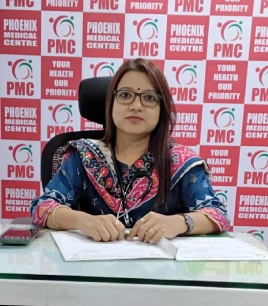
Dr. Papiya Khawas
MS
(Gyneae)
Availability: Every Day
Respiratory Care That Goes Beyond Symptom Relief
From chest tightness to breathlessness, we help your lungs feel lighter again.

Asthma Management
Get proper diagnosis, trigger control, inhaler guidance, and long-term care for better breathing.

Chronic Cough Evaluation
Find the real cause behind a cough that keeps coming back or refuses to settle.

COPD Care
Specialist support for chronic lung blockage, breathing difficulty, wheezing, and reduced stamina.

Allergy & Wheezing Care
Focused care for dust allergy, seasonal triggers, chest tightness, and recurring wheezing.

Breathlessness Evaluation
Detailed assessment to understand why breathing feels heavy, difficult, or uncomfortable.

Chest Infection Treatment
Care for bronchitis, pneumonia, congestion, and infection-related breathing discomfort.
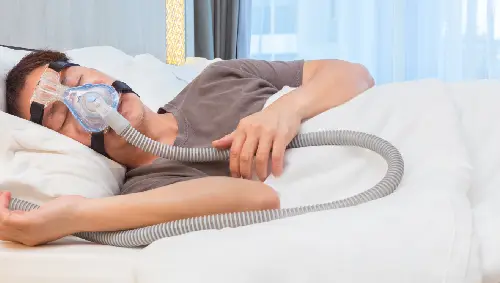
Sleep-Related Breathing Issues
Evaluation and guidance for snoring, disturbed sleep, and possible sleep breathing disorders.
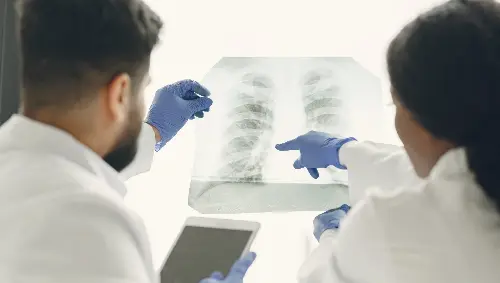
Pulmonary Function Testing
Lung function tests to measure breathing capacity and support accurate diagnosis.

Smoking-Related Lung Care
Support for smokers and ex-smokers facing cough, breathlessness, or lung health concerns.
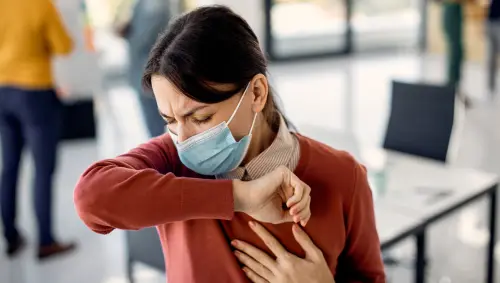
Post-Infection Lung Recovery
Care for lingering cough, weakness, chest heaviness, or breathing trouble after infections.
Expert Support for Every Breathing Concern
Specialist care for asthma, COPD, chronic cough, allergies, and breathing issues
Detailed evaluation to understand the real cause of respiratory discomfort
Patient-focused treatment plans for better breathing and daily comfort
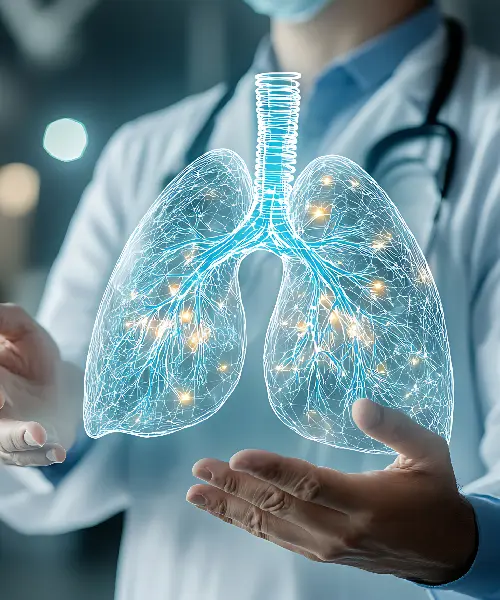
Support for long-term lung conditions with regular monitoring
Guidance for lifestyle, inhaler use, and preventive lung health
Care for sleep-related breathing problems and chest congestion
Lung Health Checkups for Better Treatment Planning
The right lung test can reveal why breathing feels heavy, noisy, or uncomfortable.

Pulmonary Function Test

Spirometry Test

Chest X-Ray

CT Scan of Chest

Oxygen Saturation Test

Allergy Testing

Sputum Test

Sleep Study

Bronchoscopy

Blood Tests
Simple Steps Toward Better Breathing
We simplify pulmonology care with clear consultation, accurate diagnosis, focused treatment, and regular follow-up.
Book Your Consultation
Schedule your pulmonology appointment and share your symptoms, concerns, and medical history.
Symptom Review
Our specialist listens to your breathing issues, cough pattern, triggers, lifestyle, and past health conditions.
Clinical Examination
A detailed chest and respiratory assessment helps understand your current lung health better.
Recommended Tests
If needed, tests like PFT, spirometry, chest X-ray, or blood tests are advised for accurate diagnosis.
Diagnosis & Treatment Plan
Your pulmonologist explains the condition clearly and creates a focused treatment plan for better breathing.
Medication & Guidance
You receive the right medicines, inhaler guidance, lifestyle tips, and preventive care support.
Follow-Up Care
Regular follow-ups help track improvement, adjust treatment, and manage long-term lung health.
Care Backed by Modern Facilities
We bring together modern facilities and patient-focused design to
make healthcare feel simpler, safer, and more comfortable.
Stories of Care, Trust & Recovery
Real experiences from patients who found support, healing, and confidence through our dedicated care.
Kushal Saha

"I have a very good experience with nice behaviour of all hospital stuff and very co operative.
Overall experience is good."
Shramona Bhattacharya
"I underwent an ERCP and later a gall bladder stone operation here. The concerned doctors treated me and operated very well. The in house staffs were nice and Cooperative. Me and my family is decently satisfied."
Arnab Bhattacharya
"Lisa and Piyali are sweet and vety warm, cleaning staff xcellent as no hiccups for all thr jobs they did , kudos to the support from all Drs. And accounts..
If any one needs to be admitted we highly recommend here"
Surajit Paul
"Nice Ambience. In house Staff Behaviour is friendly.
Food Qualities upto the mark.
Cleanliness is very good.
Need improvement in support staff or Cleaning staff behaviour/staff handling."
Clear Guidance & Safe Treatment for Lungs
Your breathing care stays transparent with clear communication, safe treatment protocols, and trusted specialist support.
Safe and hygienic testing environment for every patient
Standard infection-control protocols during respiratory assessments
Careful monitoring during breathing tests and procedures
Proper guidance for inhaler, nebulisation, and medicine use
Emergency support for severe breathing discomfort when needed
Extra care for elderly patients and chronic lung conditions
Safe follow-up planning to prevent flare-ups and complications
Patient comfort and breathing safety remain the top priority
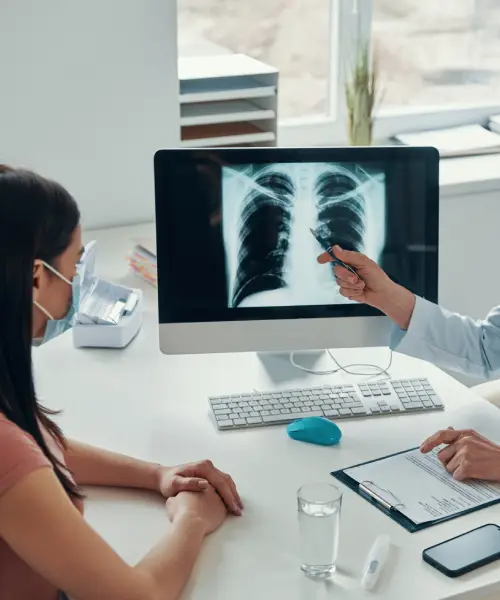
Book Your Visit in Minutes
Easily schedule appointments with our specialists online without any hassle.
Quick Answers for a Smoother Visit
From appointment doubts to care-related concerns, this section helps you understand the essentials before you take the next step.
Is a chronic cough a serious concern?
A cough lasting for weeks should not be ignored, especially if it comes with mucus, fever, wheezing, chest pain, weight loss, or breathing difficulty.
What causes breathlessness during daily activities?
Breathlessness may happen due to asthma, COPD, allergy, chest infection, weak lung function, heart-related issues, anaemia, or poor physical conditioning.
What are the common symptoms of COPD?
COPD may cause long-term cough, mucus production, breathlessness, wheezing, chest tightness, tiredness, and difficulty doing routine activities.
Can non-smokers also develop lung problems?
Yes, non-smokers can also develop lung issues due to pollution, allergies, infections, occupational exposure, second-hand smoke, genetics, or previous lung diseases.
Is wheezing always a sign of asthma?
Not always. Wheezing may happen due to asthma, allergy, bronchitis, COPD, chest infection, airway narrowing, or other respiratory conditions.